Nigerians Must Work 37.6 Days to Buy a Plane Ticket, According to IATA Report
Post By Diaspoint | October 5, 2025

The World Bank says about 139 million Nigerians are currently living in poverty despite recent government reforms that have boosted revenues and improved key economic indicators.
Speaking at the launch of the Nigeria Development Update in Abuja on Wednesday, October 8, Mathew Verghis, World Bank Country Director for Nigeria, said that while the economy is showing signs of stabilization, rising revenues, improved debt indicators, a more stable foreign exchange market, and easing inflation, most Nigerians continue to struggle with declining purchasing power.
Verghis noted that poverty has been rising since 2019, worsened by policy missteps, external shocks, and COVID-19, and has yet to reverse despite reform gains. He urged the Nigerian government to tackle food inflation, improve the efficiency of public spending, and expand social safety nets to ensure reforms translate into better living standards.
Presenting the report titled “From Policy to People: Bringing the Reform Gains Home,” Samer Matta, World Bank Lead Economist for Nigeria, said government revenues have surged in 2025, though excessive deductions by revenue-collecting agencies limit development impact.
The report projects GDP growth to rise to 4.4% by 2027, driven by stronger services, agriculture recovery, and industrial growth. Inflation is expected to ease to 15.8% by 2027, with the fiscal deficit averaging 2.7% of GDP and public debt remaining stable at around 40% of GDP.
However, the Bank warned that Nigeria’s outlook remains vulnerable to oil price shocks, reform fatigue, election uncertainty, and climate-related disruptions.

Price:
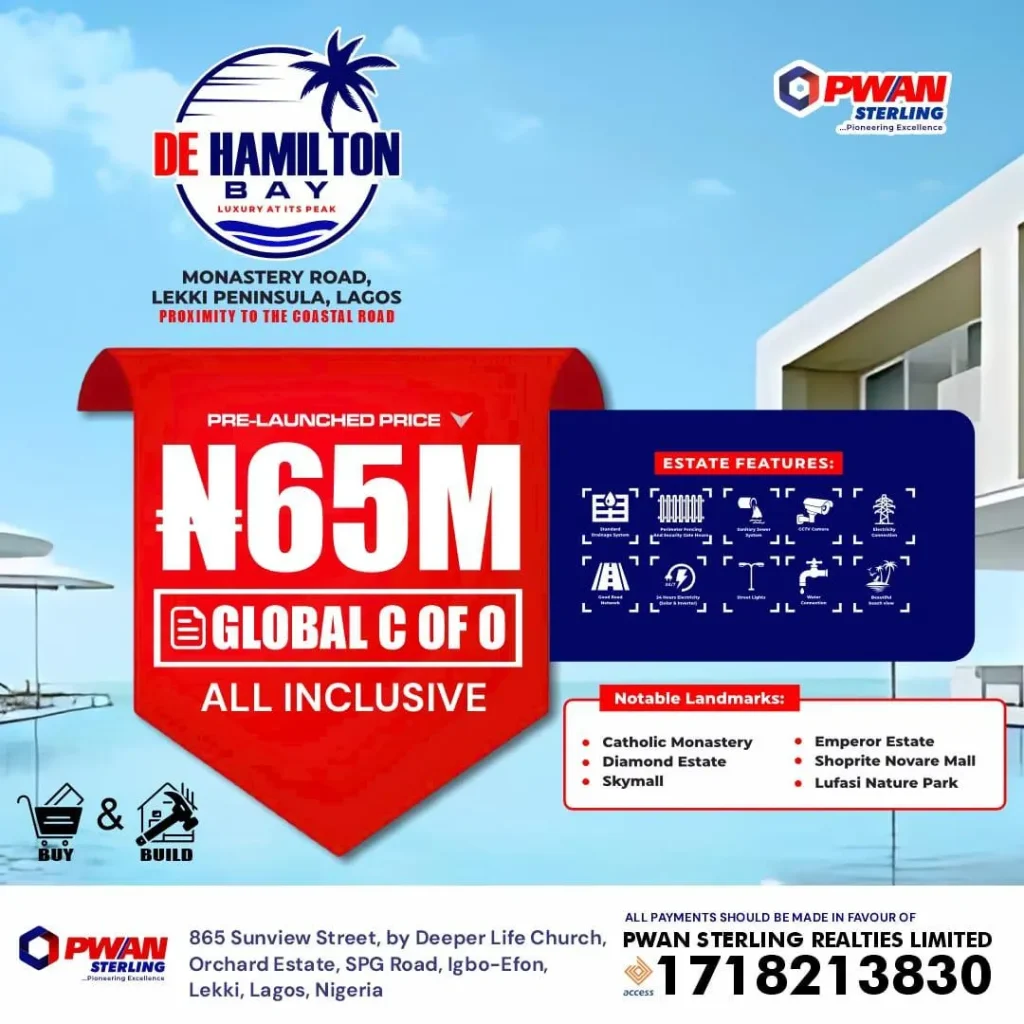
Location: Monastery Road, Lekki Peninsular, Lagos
Price: #65 Million Naira

Lekki–Epe Expressway (Just by Shoprite Sangotedo)
Price: #100 million Naira

Gudugba-Ogun State – Contac t Usshort drive from Isheri, Lagos State
Price: #20 Million Naira /Negotiable