“Self-Styled Zimbabwean Queen Nandi Evicted from Woodland Camp in Scotland”
Post By Diaspoint | October 3, 2025

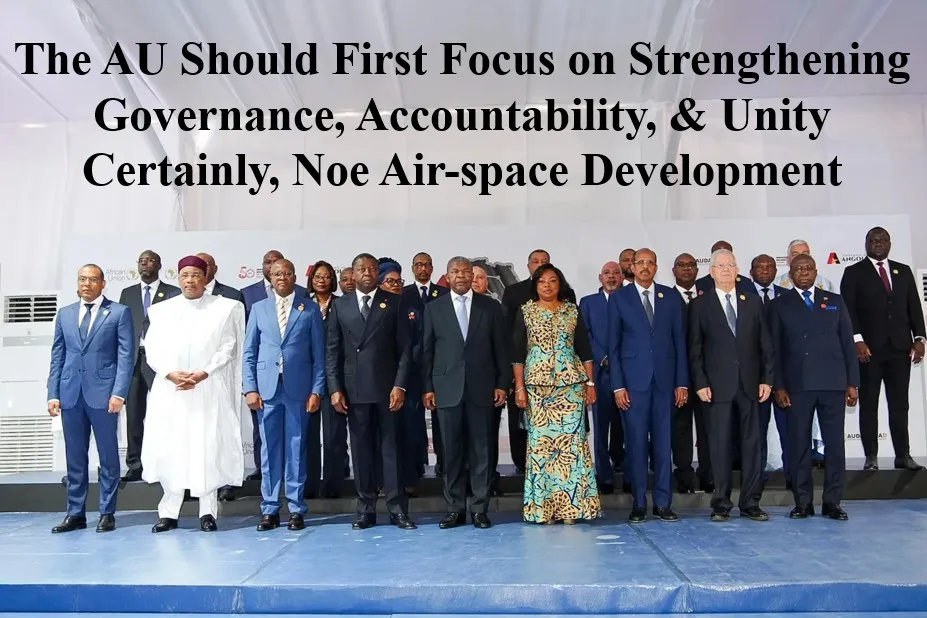
The African Union (AU) has announced a $30 billion plan to modernize airports and airspace systems across the continent over the next decade, with the stated goal of improving connectivity and advancing the Single African Air Transport Market (SAATM).
While the ambition to enhance Africa’s aviation infrastructure may appear progressive, many observers are asking a deeper question: Should the AU not first focus on strengthening governance, accountability, and unity across the continent before embarking on grand infrastructure ventures?
The initiative, unveiled at the 3rd Financing Summit for Africa’s Infrastructure Development in Luanda, allocates $10 billion for airport upgrades, $8 billion for communication and navigation systems, and $12 billion for institutional reforms and private investment incentives. Yet, this mirrors a familiar pattern African leaders borrowing heavily in the name of “development,” while tangible progress remains limited or uneven.
Across the continent, citizens continue to bear the burden of rising public debt, much of it incurred through poorly managed infrastructure projects that enrich political elites but fail to deliver meaningful transformation.
Africa has become, in many respects, the debt capital of the developing world, trapped in a cycle of external borrowing and dependency that undermines both sovereignty and self-reliance.
It is worth recalling that infrastructure development was never the founding purpose of the continental body. The Organization of African Unity (OAU), which evolved into the AU was built on the ideals of African unity, independence, and good governance.
Yet, more than six decades later, these ideals remain distant. The continent is still divided by conflicts, corruption, and authoritarian regimes, while the AU’s moral authority and collective voice grow weaker by the day.
The AU’s shift from governance to construction raises troubling questions about its priorities. By focusing on billion-dollar infrastructure schemes without addressing the continent’s governance deficit, the AU risks reproducing the same structural failures that plague its member states: corruption, mismanagement, and elite capture.
If the AU’s vision for continental transformation depends once again on foreign loans and donor-driven financing, the outcome will be predictable; more debt, limited transparency, and little benefit for the ordinary African.
Until the African Union redirects its energy toward promoting democracy, transparency, and accountable leadership, its grand economic plans will remain hollow. True development cannot take flight on weak governance.
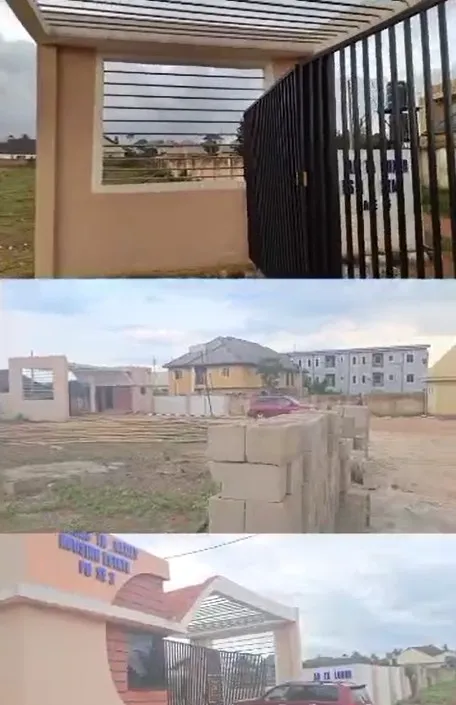
Price:
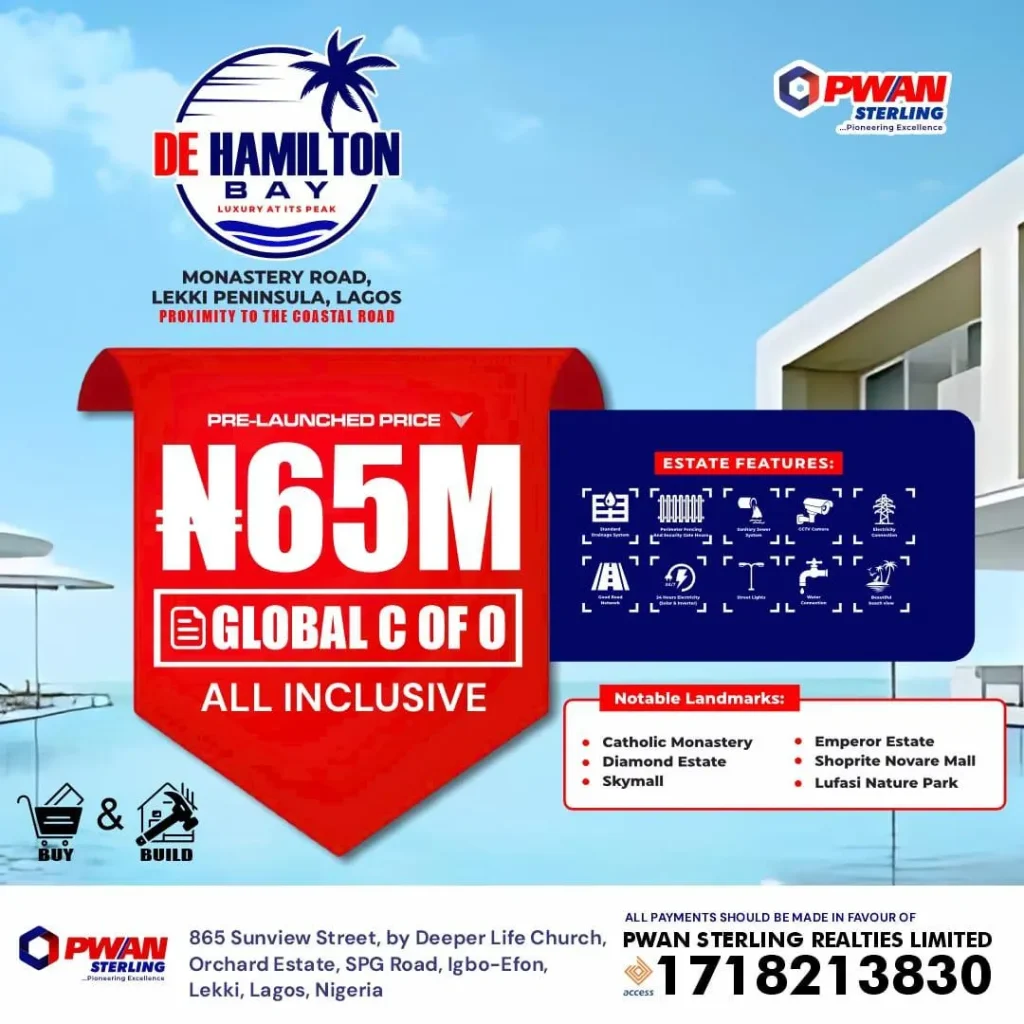
Location: Monastery Road, Lekki Peninsular, Lagos
Price: #65 Million Naira

Lekki–Epe Expressway (Just by Shoprite Sangotedo)
Price: #100 million Naira

Gudugba-Ogun State – Contac t Usshort drive from Isheri, Lagos State
Price: #20 Million Naira /Negotiable